Colleges by Location
Colleges by Fields of Study
Colleges by Tuition Range
Colleges by GPA Range
College by SAT Range
Colleges by ACT Score
Graduate Schools by Location
Graduate Schools by Fields of Study
Graduate School by Degree Type
Paying for Graduate School
Online Graduate Programs
Test Preparation
Career Planning
College Planning
Graduate School Planning
Applying to Graduate School
- More

| Median Wage (USD, 2024) | Projected Job Openings (2024-2034) | Projected Growth (2024-2034) | |
|---|---|---|---|
| National Statistics | $38090 | 158200 | 3.6% |
| State Statistics | - | - | - |
| City Statistics | - | - | - |
Experience Requirements Overview
- Job Zone 1-2: Very Little to Some Preparation Needed
- Some occupations may need little or no previous experience; others require several months to a year of experience. For example, landscaping and groundskeeping workers might require very little training or previous experience, while agricultural equipment operators can benefit from on-the job training.
- Usually requires a high school diploma or GED, though some occupations may not.
- Ranges from a few days to one year of on-the-job training.
Education, Training and Experience
Required Level of Education: Less than a High School Diploma
Related Work Experience: Over 1 year, up to and including 2 years
On-Site or In-Plant Training: N.A.
On-the-Job Training: None or short demonstration
Detailed Work Activities
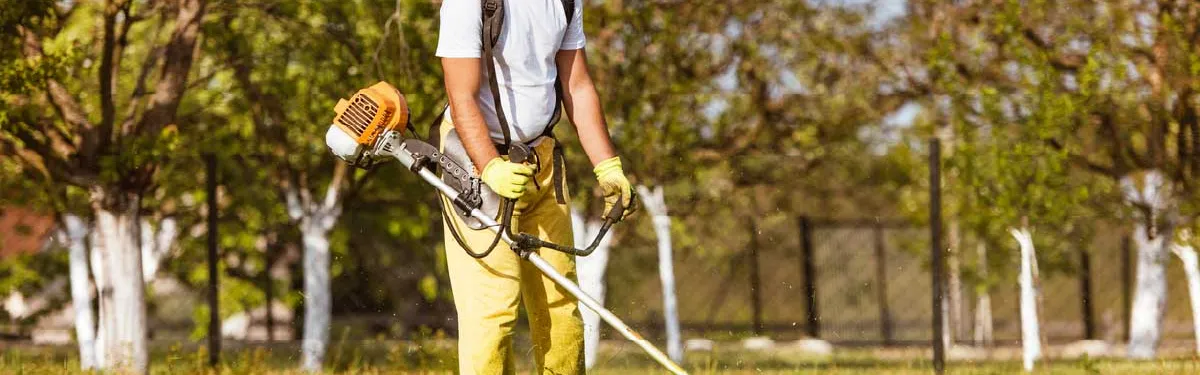
- Operate grounds maintenance equipment.
- Drive trucks or other vehicles to or at work sites.
- Trim trees or other vegetation.
- Remove snow.
- Cultivate lawns, turf, or gardens.
Work Values
Achievement
Occupations that satisfy this work value are results oriented and allow employees to use their strongest abilities, giving them a feeling of accomplishment. Corresponding needs are Ability Utilization and Achievement.
Working Conditions
Recognition
Relationships
Support
Independence
Tasks
- Gather and remove litter.
- Use hand tools, such as shovels, rakes, pruning saws, saws, hedge or brush trimmers, or axes.
- Operate vehicles or powered equipment, such as mowers, tractors, twin-axle vehicles, snow blowers, chainsaws, electric clippers, sod cutters, or pruning saws.
- Water lawns, trees, or plants, using portable sprinkler systems, hoses, or watering cans.
- Prune or trim trees, shrubs, or hedges, using shears, pruners, or chain saws.
- Mix and spray or spread fertilizers, herbicides, or insecticides onto grass, shrubs, or trees, using hand or automatic sprayers or spreaders.
- Care for established lawns by mulching, aerating, weeding, grubbing, removing thatch, or trimming or edging around flower beds, walks, or walls.
- Follow planned landscaping designs to determine where to lay sod, sow grass, or plant flowers or foliage.
- Trim or pick flowers and clean flower beds.
- Attach wires from planted trees to support stakes.
- Plant seeds, bulbs, foliage, flowering plants, grass, ground covers, trees, or shrubs, and apply mulch for protection, using gardening tools.
- Mow or edge lawns, using power mowers or edgers.
- Rake, mulch, and compost leaves.
- Decorate gardens with stones or plants.
- Use irrigation methods to adjust the amount of water consumption and to prevent waste.
- Provide proper upkeep of sidewalks, driveways, parking lots, fountains, planters, burial sites, or other grounds features.
- Shovel snow from walks, driveways, or parking lots, and spread salt in those areas.
- Maintain irrigation systems, including winterizing the systems and starting them up in spring.
- Plan or cultivate lawns or gardens.
- Maintain or repair tools, equipment, or structures, such as buildings, greenhouses, fences, or benches, using hand or power tools.
- Care for artificial turf fields, periodically removing the turf and replacing cushioning pads or vacuuming and disinfecting the turf after use to prevent the growth of harmful bacteria.
- Install rock gardens, ponds, decks, drainage systems, irrigation systems, retaining walls, fences, planters, or playground equipment.
- Care for natural turf fields, making sure the underlying soil has the required composition to allow proper drainage and to support the grasses.
- Advise customers on plant selection or care.
- Haul or spread topsoil, or spread straw over seeded soil to hold soil in place.
- Build forms and mix and pour cement to form garden borders.
Work Styles
Innovation
A tendency to be inventive, to be imaginative, and to adopt new perspectives on ways to accomplish work.
Innovation
Achievement Orientation
Achievement Orientation
Intellectual Curiosity
Intellectual Curiosity
Tolerance for Ambiguity
Tolerance for Ambiguity
Initiative
Initiative
Adaptability
Adaptability
Self-Confidence
Self-Confidence
Perseverance
Perseverance
Leadership Orientation
Leadership Orientation
Humility
Humility
Sincerity
Sincerity
Empathy
Empathy
Cooperation
Cooperation
Optimism
Optimism
Social Orientation
Social Orientation
Cautiousness
Cautiousness
Attention to Detail
Attention to Detail
Dependability
Dependability
Integrity
Integrity
Stress Tolerance
Stress Tolerance
Self-Control
Self-Control
Data Source: This page includes information from the O*NET 30.0 Database by the U.S. Department of Labor, Employment and Training Administration (USDOL/ETA). Used under the CC BY 4.0 license. O*NET® is a trademark of USDOL/ETA. This page includes Employment Projections program, Occupational Employment and Wage Statistics program, U.S. Bureau of Labor Statistics.