Colleges by Location
Colleges by Fields of Study
Colleges by Tuition Range
Colleges by GPA Range
College by SAT Range
Colleges by ACT Score
Graduate Schools by Location
Graduate Schools by Fields of Study
Graduate School by Degree Type
Paying for Graduate School
Online Graduate Programs
Test Preparation
Career Planning
College Planning
Graduate School Planning
Applying to Graduate School
- More

| Median Wage (USD, 2024) | Projected Job Openings (2024-2034) | Projected Growth (2024-2034) | |
|---|---|---|---|
| National Statistics | $46940 | 2300 | 4.6% |
| State Statistics | - | - | - |
| City Statistics | - | - | - |
Experience Requirements Overview
- Job Zone 1-2: Very Little to Some Preparation Needed
- Some occupations may need little or no previous experience; others require several months to a year of experience. For example, landscaping and groundskeeping workers might require very little training or previous experience, while agricultural equipment operators can benefit from on-the job training.
- Usually requires a high school diploma or GED, though some occupations may not.
- Ranges from a few days to one year of on-the-job training.
Education, Training and Experience
Required Level of Education: High School Diploma - or the equivalent (for example, GED)
Related Work Experience: N.A.
On-Site or In-Plant Training: Over 3 months, up to and including 6 months
On-the-Job Training: Over 6 months, up to and including 1 year
Detailed Work Activities
- Determine appropriate locations for operations or installations.
- Verify alignment of structures or equipment.
- Position structural components.
- Measure work site dimensions.
- Mark reference points on construction materials.
Work Values
Achievement
Occupations that satisfy this work value are results oriented and allow employees to use their strongest abilities, giving them a feeling of accomplishment. Corresponding needs are Ability Utilization and Achievement.
Working Conditions
Recognition
Relationships
Support
Independence
Tasks
- Establish the location for a fence, and gather information needed to ensure that there are no electric cables or water lines in the area.
- Set metal or wooden posts in upright positions in postholes.
- Measure and lay out fence lines and mark posthole positions, following instructions, drawings, or specifications.
- Align posts, by lines or sighting, and verify vertical alignment of posts, using plumb bobs or spirit levels.
- Attach rails or tension wire along bottoms of posts to form fencing frames.
- Dig postholes, using spades, posthole diggers, or power-driven augers.
- Attach fence rail supports to posts, using hammers and pliers.
- Assemble gates, and fasten gates into position, using hand tools.
- Mix and pour concrete around bases of posts, or tamp soil into postholes to embed posts.
- Make rails for fences, by sawing lumber or by cutting metal tubing to required lengths.
- Nail top and bottom rails to fence posts, or insert them in slots on posts.
- Discuss fencing needs with customers, and estimate and quote prices.
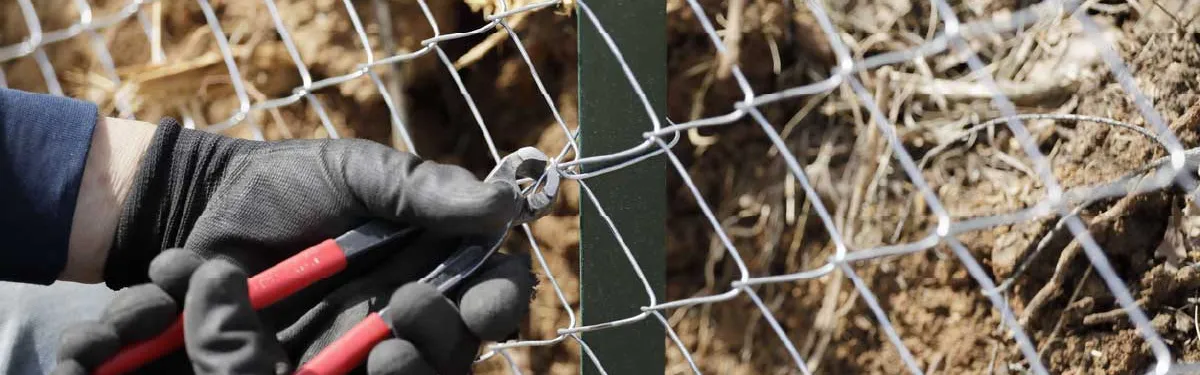
- Stretch wire, wire mesh, or chain link fencing between posts, and attach fencing to frames.
- Complete top fence rails of metal fences by connecting tube sections, using metal sleeves.
- Erect alternate panel, basket weave, and louvered fences.
- Insert metal tubing through rail supports.
- Nail pointed slats to rails to construct picket fences.
- Construct and repair barriers, retaining walls, trellises, and other types of fences, walls, and gates.
- Weld metal parts together, using portable gas welding equipment.
- Blast rock formations and rocky areas with dynamite to facilitate posthole digging.
Work Styles
Innovation
A tendency to be inventive, to be imaginative, and to adopt new perspectives on ways to accomplish work.
Innovation
Achievement Orientation
Achievement Orientation
Intellectual Curiosity
Intellectual Curiosity
Tolerance for Ambiguity
Tolerance for Ambiguity
Initiative
Initiative
Adaptability
Adaptability
Self-Confidence
Self-Confidence
Perseverance
Perseverance
Leadership Orientation
Leadership Orientation
Humility
Humility
Sincerity
Sincerity
Empathy
Empathy
Cooperation
Cooperation
Optimism
Optimism
Social Orientation
Social Orientation
Cautiousness
Cautiousness
Attention to Detail
Attention to Detail
Dependability
Dependability
Integrity
Integrity
Stress Tolerance
Stress Tolerance
Self-Control
Self-Control
Data Source: This page includes information from the O*NET 30.0 Database by the U.S. Department of Labor, Employment and Training Administration (USDOL/ETA). Used under the CC BY 4.0 license. O*NET® is a trademark of USDOL/ETA. This page includes Employment Projections program, Occupational Employment and Wage Statistics program, U.S. Bureau of Labor Statistics.