Colleges by Location
Colleges by Fields of Study
Colleges by Tuition Range
Colleges by GPA Range
College by SAT Range
Colleges by ACT Score
Graduate Schools by Location
Graduate Schools by Fields of Study
Graduate School by Degree Type
Paying for Graduate School
Online Graduate Programs
Test Preparation
Career Planning
College Planning
Graduate School Planning
Applying to Graduate School
- More

| Median Wage (USD, 2024) | Projected Job Openings (2024-2034) | Projected Growth (2024-2034) | |
|---|---|---|---|
| National Statistics | $47680 | 8800 | -6.8% |
| State Statistics | - | - | - |
| City Statistics | - | - | - |
Experience Requirements Overview
- Job Zone 1-2: Very Little to Some Preparation Needed
- Some occupations may need little or no previous experience; others require several months to a year of experience. For example, landscaping and groundskeeping workers might require very little training or previous experience, while agricultural equipment operators can benefit from on-the job training.
- Usually requires a high school diploma or GED, though some occupations may not.
- Ranges from a few days to one year of on-the-job training.
Education, Training and Experience
Required Level of Education: High School Diploma - or the equivalent (for example, GED)
Related Work Experience: N.A.
On-Site or In-Plant Training: Over 1 month, up to and including 3 months
On-the-Job Training: Over 1 month, up to and including 3 months
Detailed Work Activities
- Measure ingredients or substances to be used in production processes.
- Weigh finished products.
- Measure dimensions of completed products or workpieces to verify conformance to specifications.
- Test chemical or physical characteristics of materials or products.
- Operate cooking, baking, or other food preparation equipment.
Work Values
Achievement
Occupations that satisfy this work value are results oriented and allow employees to use their strongest abilities, giving them a feeling of accomplishment. Corresponding needs are Ability Utilization and Achievement.
Working Conditions
Recognition
Relationships
Support
Independence
Tasks
- Weigh or measure materials, ingredients, or products to ensure conformance to requirements.
- Read work orders to determine production specifications or information.
- Observe production or monitor equipment to ensure safe and efficient operation.
- Mix or blend ingredients by starting machines and mixing for specified times.
- Stop mixing or blending machines when specified product qualities are obtained and open valves and start pumps to transfer mixtures.
- Compound or process ingredients or dyes, according to formulas.
- Examine materials, ingredients, or products visually or with hands to ensure conformance to established standards.
- Operate or tend machines to mix or blend any of a wide variety of materials, such as spices, dough batter, tobacco, fruit juices, chemicals, livestock feed, food products, color pigments, or explosive ingredients.
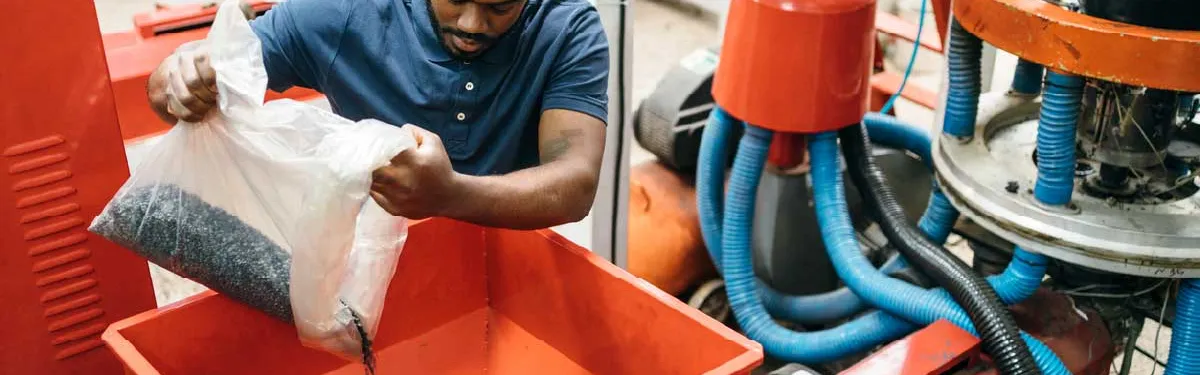
- Dump or pour specified amounts of materials into machinery or equipment.
- Record operational or production data on specified forms.
- Collect samples of materials or products for laboratory testing.
- Unload mixtures into containers or onto conveyors for further processing.
- Clean work areas.
- Add or mix chemicals or ingredients for processing, using hand tools or other devices.
- Tend accessory equipment, such as pumps or conveyors, to move materials or ingredients through production processes.
- Transfer materials, supplies, or products between work areas, using moving equipment or hand tools.
- Clean and maintain equipment, using hand tools.
- Dislodge and clear jammed materials or other items from machinery or equipment, using hand tools.
- Test samples of materials or products to ensure compliance with specifications, using test equipment.
- Open valves to drain slurry from mixers into storage tanks.
Work Styles
Innovation
A tendency to be inventive, to be imaginative, and to adopt new perspectives on ways to accomplish work.
Innovation
Achievement Orientation
Achievement Orientation
Intellectual Curiosity
Intellectual Curiosity
Tolerance for Ambiguity
Tolerance for Ambiguity
Initiative
Initiative
Adaptability
Adaptability
Self-Confidence
Self-Confidence
Perseverance
Perseverance
Leadership Orientation
Leadership Orientation
Humility
Humility
Sincerity
Sincerity
Empathy
Empathy
Cooperation
Cooperation
Optimism
Optimism
Social Orientation
Social Orientation
Cautiousness
Cautiousness
Attention to Detail
Attention to Detail
Dependability
Dependability
Integrity
Integrity
Stress Tolerance
Stress Tolerance
Self-Control
Self-Control
Data Source: This page includes information from the O*NET 30.0 Database by the U.S. Department of Labor, Employment and Training Administration (USDOL/ETA). Used under the CC BY 4.0 license. O*NET® is a trademark of USDOL/ETA. This page includes Employment Projections program, Occupational Employment and Wage Statistics program, U.S. Bureau of Labor Statistics.