Colleges by Location
Colleges by Fields of Study
Colleges by Tuition Range
Colleges by GPA Range
College by SAT Range
Colleges by ACT Score
Graduate Schools by Location
Graduate Schools by Fields of Study
Graduate School by Degree Type
Paying for Graduate School
Online Graduate Programs
Test Preparation
Career Planning
College Planning
Graduate School Planning
Applying to Graduate School
- More

| Median Wage (USD, 2024) | Projected Job Openings (2024-2034) | Projected Growth (2024-2034) | |
|---|---|---|---|
| National Statistics | $40100 | 1500 | -2.6% |
| State Statistics | - | - | - |
| City Statistics | - | - | - |
Experience Requirements Overview
- Job Zone 1-2: Very Little to Some Preparation Needed
- Some occupations may need little or no previous experience; others require several months to a year of experience. For example, landscaping and groundskeeping workers might require very little training or previous experience, while agricultural equipment operators can benefit from on-the job training.
- Usually requires a high school diploma or GED, though some occupations may not.
- Ranges from a few days to one year of on-the-job training.
Education, Training and Experience
Required Level of Education: High School Diploma - or the equivalent (for example, GED)
Related Work Experience: N.A.
On-Site or In-Plant Training: Up to and including 1 month
On-the-Job Training: Over 1 month, up to and including 3 months
Detailed Work Activities
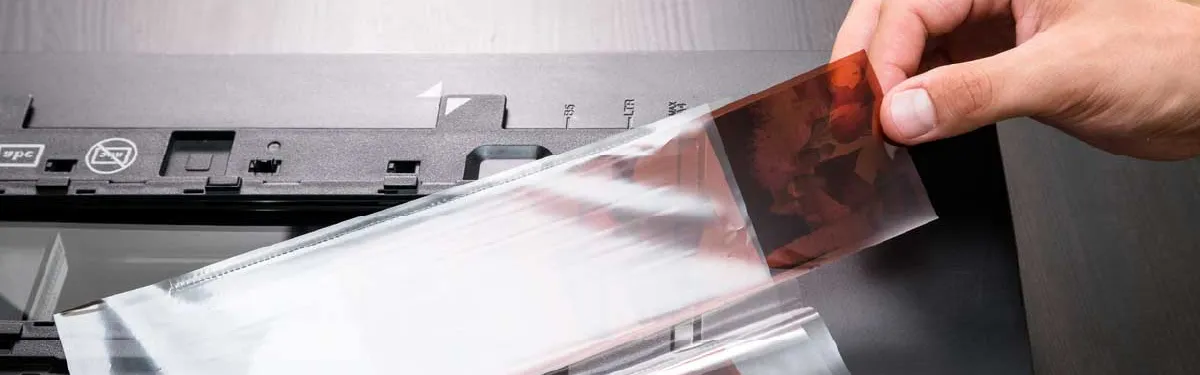
- Operate photographic developing or print production equipment.
- Inspected printed materials or other images to verify quality.
- Load materials into production equipment.
- Immerse objects or workpieces in cleaning or coating solutions.
- Prepare outgoing mail.
Work Values
Achievement
Occupations that satisfy this work value are results oriented and allow employees to use their strongest abilities, giving them a feeling of accomplishment. Corresponding needs are Ability Utilization and Achievement.
Working Conditions
Recognition
Relationships
Support
Independence
Tasks
- Select digital images for printing, specify number of images to be printed, and direct to printer, using computer software.
- Create prints according to customer specifications and laboratory protocols.
- Produce color or black-and-white photographs, negatives, or slides, applying standard photographic reproduction techniques and procedures.
- Set or adjust machine controls, according to specifications, type of operation, or material requirements.
- Review computer-processed digital images for quality.
- Operate scanners or related computer equipment to digitize negatives, photographic prints, or other images.
- Fill tanks of processing machines with solutions such as developer, dyes, stop-baths, fixers, bleaches, or washes.
- Measure and mix chemicals to prepare solutions for processing, according to formulas.
- Load digital images onto computers directly from cameras or from storage devices, such as flash memory cards or universal serial bus (USB) devices.
- Operate special equipment to perform tasks such as transferring film to videotape or producing photographic enlargements.
- Examine developed prints for defects, such as broken lines, spots, or blurs.
- Read work orders to determine required processes, techniques, materials, or equipment.
- Load circuit boards, racks or rolls of film, negatives, or printing paper into processing or printing machines.
- Insert processed negatives and prints into envelopes for delivery to customers.
- Reprint originals for enlargement or in sections to be pieced together.
- Clean or maintain photoprocessing or darkroom equipment, using ultrasonic equipment or cleaning and rinsing solutions.
- Monitor equipment operation to detect malfunctions.
- Maintain records, such as quantities or types of processing completed, materials used, or customer charges.
- Immerse film, negatives, paper, or prints in developing solutions, fixing solutions, and water to complete photographic development processes.
- Examine quality of film fades or dissolves for potential color corrections, using color analyzers.
- Thread filmstrips through densitometers or sensitometers and expose film to light to determine density of film, necessary color corrections, or light sensitivity.
- Examine drawings, negatives, or photographic prints to determine coloring, shading, accenting, or other changes required for retouching or restoration.
- Place sensitized paper in frames of projection printers, photostats, or other reproduction machines.
- Upload digital images onto Web sites for customers.
- Produce timed prints with separate densities or color settings for each scene of a production.
- Splice broken or separated film and mount film on reels.
- Retouch photographic negatives or original prints to correct defects.
Work Styles
Innovation
A tendency to be inventive, to be imaginative, and to adopt new perspectives on ways to accomplish work.
Innovation
Achievement Orientation
Achievement Orientation
Intellectual Curiosity
Intellectual Curiosity
Tolerance for Ambiguity
Tolerance for Ambiguity
Initiative
Initiative
Adaptability
Adaptability
Self-Confidence
Self-Confidence
Perseverance
Perseverance
Leadership Orientation
Leadership Orientation
Humility
Humility
Sincerity
Sincerity
Empathy
Empathy
Cooperation
Cooperation
Optimism
Optimism
Social Orientation
Social Orientation
Cautiousness
Cautiousness
Attention to Detail
Attention to Detail
Dependability
Dependability
Integrity
Integrity
Stress Tolerance
Stress Tolerance
Self-Control
Self-Control
Data Source: This page includes information from the O*NET 30.0 Database by the U.S. Department of Labor, Employment and Training Administration (USDOL/ETA). Used under the CC BY 4.0 license. O*NET® is a trademark of USDOL/ETA. This page includes Employment Projections program, Occupational Employment and Wage Statistics program, U.S. Bureau of Labor Statistics.