Colleges by Location
Colleges by Fields of Study
Colleges by Tuition Range
Colleges by GPA Range
College by SAT Range
Colleges by ACT Score
Graduate Schools by Location
Graduate Schools by Fields of Study
Graduate School by Degree Type
Paying for Graduate School
Online Graduate Programs
Test Preparation
Career Planning
College Planning
Graduate School Planning
Applying to Graduate School
- More
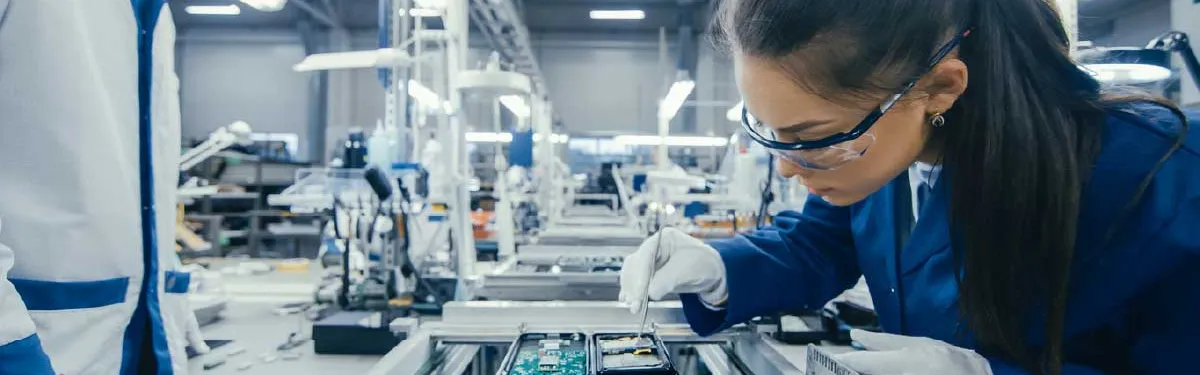

| Median Wage (USD, 2024) | Projected Job Openings (2024-2034) | Projected Growth (2024-2034) | |
|---|---|---|---|
| National Statistics | $51180 | 3900 | 10.9% |
| State Statistics | - | - | - |
| City Statistics | - | - | - |
Experience Requirements Overview
- Job Zone 1-2: Very Little to Some Preparation Needed
- Some occupations may need little or no previous experience; others require several months to a year of experience. For example, landscaping and groundskeeping workers might require very little training or previous experience, while agricultural equipment operators can benefit from on-the job training.
- Usually requires a high school diploma or GED, though some occupations may not.
- Ranges from a few days to one year of on-the-job training.
Education, Training and Experience
Required Level of Education: High School Diploma - or the equivalent (for example, GED)
Related Work Experience: N.A.
On-Site or In-Plant Training: Over 3 months, up to and including 6 months
On-the-Job Training: Over 6 months, up to and including 1 year
Detailed Work Activities
- Enter commands, instructions, or specifications into equipment.
- Record operational or production data.
- Measure dimensions of completed products or workpieces to verify conformance to specifications.
- Clean workpieces or finished products.
- Read work orders or other instructions to determine product specifications or materials requirements.
Work Values
Achievement
Occupations that satisfy this work value are results oriented and allow employees to use their strongest abilities, giving them a feeling of accomplishment. Corresponding needs are Ability Utilization and Achievement.
Working Conditions
Recognition
Relationships
Support
Independence
Tasks
- Manipulate valves, switches, and buttons, or key commands into control panels to start semiconductor processing cycles.
- Maintain processing, production, and inspection information and reports.
- Inspect materials, components, or products for surface defects and measure circuitry, using electronic test equipment, precision measuring instruments, microscope, and standard procedures.
- Clean semiconductor wafers using cleaning equipment, such as chemical baths, automatic wafer cleaners, or blow-off wands.
- Study work orders, instructions, formulas, and processing charts to determine specifications and sequence of operations.
- Load and unload equipment chambers and transport finished product to storage or to area for further processing.
- Clean and maintain equipment, including replacing etching and rinsing solutions and cleaning bath containers and work area.
- Place semiconductor wafers in processing containers or equipment holders, using vacuum wand or tweezers.
- Set, adjust, and readjust computerized or mechanical equipment controls to regulate power level, temperature, vacuum, and rotation speed of furnace, according to crystal growing specifications.
- Etch, lap, polish, or grind wafers or ingots to form circuitry and change conductive properties, using etching, lapping, polishing, or grinding equipment.
- Load semiconductor material into furnace.
- Monitor operation and adjust controls of processing machines and equipment to produce compositions with specific electronic properties, using computer terminals.
- Count, sort, and weigh processed items.
- Calculate etching time based on thickness of material to be removed from wafers or crystals.
- Inspect equipment for leaks, diagnose malfunctions, and request repairs.
- Align photo mask pattern on photoresist layer, expose pattern to ultraviolet light, and develop pattern, using specialized equipment.
- Stamp, etch, or scribe identifying information on finished component according to specifications.
- Scribe or separate wafers into dice.
- Connect reactor to computer, using hand tools and power tools.
- Measure and weigh amounts of crystal growing materials, mix and grind materials, load materials into container, and monitor processing procedures to help identify crystal growing problems.
Work Styles
Innovation
A tendency to be inventive, to be imaginative, and to adopt new perspectives on ways to accomplish work.
Innovation
Achievement Orientation
Achievement Orientation
Intellectual Curiosity
Intellectual Curiosity
Tolerance for Ambiguity
Tolerance for Ambiguity
Initiative
Initiative
Adaptability
Adaptability
Self-Confidence
Self-Confidence
Perseverance
Perseverance
Leadership Orientation
Leadership Orientation
Humility
Humility
Sincerity
Sincerity
Empathy
Empathy
Cooperation
Cooperation
Optimism
Optimism
Social Orientation
Social Orientation
Cautiousness
Cautiousness
Attention to Detail
Attention to Detail
Dependability
Dependability
Integrity
Integrity
Stress Tolerance
Stress Tolerance
Self-Control
Self-Control
Data Source: This page includes information from the O*NET 30.0 Database by the U.S. Department of Labor, Employment and Training Administration (USDOL/ETA). Used under the CC BY 4.0 license. O*NET® is a trademark of USDOL/ETA. This page includes Employment Projections program, Occupational Employment and Wage Statistics program, U.S. Bureau of Labor Statistics.