Colleges by Location
Colleges by Fields of Study
Colleges by Tuition Range
Colleges by GPA Range
College by SAT Range
Colleges by ACT Score
Graduate Schools by Location
Graduate Schools by Fields of Study
Graduate School by Degree Type
Paying for Graduate School
Online Graduate Programs
Test Preparation
Career Planning
College Planning
Graduate School Planning
Applying to Graduate School
- More

| Median Wage (USD, 2024) | Projected Job Openings (2024-2034) | Projected Growth (2024-2034) | |
|---|---|---|---|
| National Statistics | $63180 | 4700 | -10.8% |
| State Statistics | - | - | - |
| City Statistics | - | - | - |
Experience Requirements Overview
- Job Zone Three: Medium Preparation Needed
- Previous work-related skill, knowledge, or experience is required for these occupations. For example, an electrician must have completed three or four years of apprenticeship or several years of vocational training, and often must have passed a licensing exam, in order to perform the job.
- Most occupations in this zone require training in vocational schools, related on-the-job experience, or an associate's degree.
- Employees in these occupations usually need one or two years of training involving both on-the-job experience and informal training with experienced workers. A recognized apprenticeship program may be associated with these occupations.
Education, Training and Experience
Required Level of Education: Post-Secondary Certificate - awarded for training completed after high school (for example, in agriculture or natural resources, computer services, personal or culinary services, engineering technologies, healthcare, construction trades, mechanic and repair technologies, or precision production)
Related Work Experience: Over 4 years, up to and including 6 years
On-Site or In-Plant Training: Over 6 months, up to and including 1 year
On-the-Job Training: Over 1 year, up to and including 2 years
Detailed Work Activities
- Assemble machine tools, parts, or fixtures.
- Operate welding equipment.
- Repair parts or assemblies.
- Review blueprints or other instructions to determine operational methods or sequences.
- Measure dimensions of completed products or workpieces to verify conformance to specifications.
Work Values
Achievement
Occupations that satisfy this work value are results oriented and allow employees to use their strongest abilities, giving them a feeling of accomplishment. Corresponding needs are Ability Utilization and Achievement.
Working Conditions
Recognition
Relationships
Support
Independence
Tasks
- Verify dimensions, alignments, and clearances of finished parts for conformance to specifications, using measuring instruments such as calipers, gauge blocks, micrometers, or dial indicators.
- Set up and operate conventional or computer numerically controlled machine tools such as lathes, milling machines, or grinders to cut, bore, grind, or otherwise shape parts to prescribed dimensions and finishes.
- Visualize and compute dimensions, sizes, shapes, and tolerances of assemblies, based on specifications.
- Study blueprints, sketches, models, or specifications to plan sequences of operations for fabricating tools, dies, or assemblies.
- Fit and assemble parts to make, repair, or modify dies, jigs, gauges, and tools, using machine tools, hand tools, or welders.
- Inspect finished dies for smoothness, contour conformity, and defects.
- Select metals to be used from a range of metals and alloys, based on properties such as hardness or heat tolerance.
- Lift, position, and secure machined parts on surface plates or worktables, using hoists, vises, v-blocks, or angle plates.
- File, grind, shim, and adjust different parts to properly fit them together.
- Smooth and polish flat and contoured surfaces of parts or tools, using scrapers, abrasive stones, files, emery cloths, or power grinders.
- Measure, mark, and scribe metal or plastic stock to lay out machining, using instruments such as protractors, micrometers, scribes, or rulers.
- Conduct test runs with completed tools or dies to ensure that parts meet specifications, making adjustments as necessary.
- Design jigs, fixtures, and templates for use as work aids in the fabrication of parts or products.
- Cut, shape, and trim blanks or blocks to specified lengths or shapes, using power saws, power shears, rules, and hand tools.
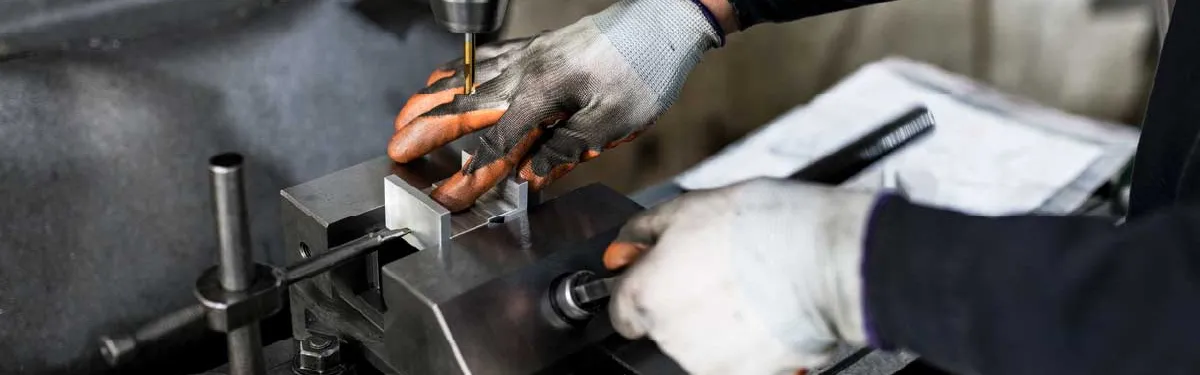
- Set up and operate drill presses to drill and tap holes in parts for assembly.
- Develop and design new tools and dies, using computer-aided design software.
- Set pyrometer controls of heat-treating furnaces and feed or place parts, tools, or assemblies into furnaces to harden.
Work Styles
Innovation
A tendency to be inventive, to be imaginative, and to adopt new perspectives on ways to accomplish work.
Innovation
Achievement Orientation
Achievement Orientation
Intellectual Curiosity
Intellectual Curiosity
Tolerance for Ambiguity
Tolerance for Ambiguity
Initiative
Initiative
Adaptability
Adaptability
Self-Confidence
Self-Confidence
Perseverance
Perseverance
Leadership Orientation
Leadership Orientation
Humility
Humility
Sincerity
Sincerity
Empathy
Empathy
Cooperation
Cooperation
Optimism
Optimism
Social Orientation
Social Orientation
Cautiousness
Cautiousness
Attention to Detail
Attention to Detail
Dependability
Dependability
Integrity
Integrity
Stress Tolerance
Stress Tolerance
Self-Control
Self-Control
Data Source: This page includes information from the O*NET 30.0 Database by the U.S. Department of Labor, Employment and Training Administration (USDOL/ETA). Used under the CC BY 4.0 license. O*NET® is a trademark of USDOL/ETA. This page includes Employment Projections program, Occupational Employment and Wage Statistics program, U.S. Bureau of Labor Statistics.