Colleges by Location
Colleges by Fields of Study
Colleges by Tuition Range
Colleges by GPA Range
College by SAT Range
Colleges by ACT Score
Graduate Schools by Location
Graduate Schools by Fields of Study
Graduate School by Degree Type
Paying for Graduate School
Online Graduate Programs
Test Preparation
Career Planning
College Planning
Graduate School Planning
Applying to Graduate School
- More
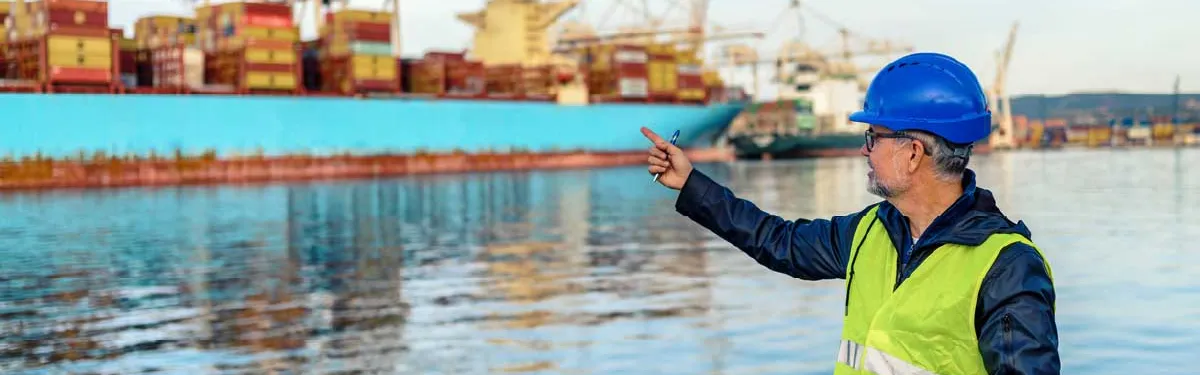

| Median Wage (USD, 2024) | Projected Job Openings (2024-2034) | Projected Growth (2024-2034) | |
|---|---|---|---|
| National Statistics | $101320 | 1100 | 1.6% |
| State Statistics | - | - | - |
| City Statistics | - | - | - |
Experience Requirements Overview
- Job Zone Three: Medium Preparation Needed
- Previous work-related skill, knowledge, or experience is required for these occupations. For example, an electrician must have completed three or four years of apprenticeship or several years of vocational training, and often must have passed a licensing exam, in order to perform the job.
- Most occupations in this zone require training in vocational schools, related on-the-job experience, or an associate's degree.
- Employees in these occupations usually need one or two years of training involving both on-the-job experience and informal training with experienced workers. A recognized apprenticeship program may be associated with these occupations.
Education, Training and Experience
Required Level of Education: High School Diploma - or the equivalent (for example, GED)
Related Work Experience: Over 1 year, up to and including 2 years
On-Site or In-Plant Training: Over 6 months, up to and including 1 year
On-the-Job Training: Over 6 months, up to and including 1 year
Detailed Work Activities
- Monitor availability of equipment or supplies.
- Monitor engine operation or functioning.
- Report vehicle or equipment malfunctions.
- Maintain watercraft engines or machinery.
- Record operational details of travel.
Work Values
Achievement
Occupations that satisfy this work value are results oriented and allow employees to use their strongest abilities, giving them a feeling of accomplishment. Corresponding needs are Ability Utilization and Achievement.
Working Conditions
Recognition
Relationships
Support
Independence
Tasks
- Monitor engine, machinery, or equipment indicators when vessels are underway, and report abnormalities to appropriate shipboard staff.
- Monitor the availability, use, or condition of lifesaving equipment or pollution preventatives to ensure that international regulations are followed.
- Monitor and test operations of engines or other equipment so that malfunctions and their causes can be identified.
- Start engines to propel ships, and regulate engines and power transmissions to control speeds of ships, according to directions from captains or bridge computers.
- Perform or participate in emergency drills, as required.
- Perform general marine vessel maintenance or repair work, such as repairing leaks, finishing interiors, refueling, or maintaining decks.
- Maintain or repair engines, electric motors, pumps, winches, or other mechanical or electrical equipment, or assist other crew members with maintenance or repair duties.
- Maintain complete records of engineering department activities, including machine operations.
- Operate or maintain off-loading liquid pumps or valves.
- Maintain electrical power, heating, ventilation, refrigeration, water, or sewerage systems.
- Install engine controls, propeller shafts, or propellers.
- Clean engine parts and keep engine rooms clean.
- Record orders for changes in ship speed or direction, and note gauge readings or test data, such as revolutions per minute or voltage output, in engineering logs or bellbooks.
- Order and receive engine room stores, such as oil or spare parts, maintain inventories, and record usage of supplies.
- Act as a liaison between a ship's captain and shore personnel to ensure that schedules and budgets are maintained and that the ship is operated safely and efficiently.
- Supervise marine engine technicians engaged in the maintenance or repair of mechanical or electrical marine vessels, and inspect their work to ensure that it is performed properly.
- Fabricate engine replacement parts, such as valves, stay rods, or bolts, using metalworking machinery.
Work Styles
Innovation
A tendency to be inventive, to be imaginative, and to adopt new perspectives on ways to accomplish work.
Innovation
Achievement Orientation
Achievement Orientation
Intellectual Curiosity
Intellectual Curiosity
Tolerance for Ambiguity
Tolerance for Ambiguity
Initiative
Initiative
Adaptability
Adaptability
Self-Confidence
Self-Confidence
Perseverance
Perseverance
Leadership Orientation
Leadership Orientation
Humility
Humility
Sincerity
Sincerity
Empathy
Empathy
Cooperation
Cooperation
Optimism
Optimism
Social Orientation
Social Orientation
Cautiousness
Cautiousness
Attention to Detail
Attention to Detail
Dependability
Dependability
Integrity
Integrity
Stress Tolerance
Stress Tolerance
Self-Control
Self-Control
Data Source: This page includes information from the O*NET 30.0 Database by the U.S. Department of Labor, Employment and Training Administration (USDOL/ETA). Used under the CC BY 4.0 license. O*NET® is a trademark of USDOL/ETA. This page includes Employment Projections program, Occupational Employment and Wage Statistics program, U.S. Bureau of Labor Statistics.